What Is Craft Beer, Really?
You’ve seen the label.
You’ve heard the hype.
Maybe you’ve paid a little more for it.
But what actually makes a beer “craft”?
Is it smaller? More expensive? More bitter? Trendier?
Not exactly.
The term “craft beer” isn’t just about taste — it’s about scale, ownership, and philosophy. And understanding it changes how you see the entire beer landscape.
The Official Definition of Craft Beer
In the United States, the Brewers Association defines a craft brewery as:
- Small — Producing 6 million barrels of beer or less per year
- Independent — Less than 25% owned by a non-craft beverage company
- Traditional — Most of its beer derives flavor from traditional or innovative brewing ingredients
This definition focuses on structure, not flavor.
But numbers alone don’t tell the full story.
Globally, “craft beer” isn’t regulated by one universal rulebook. In Europe, Latin America, and Asia, the meaning leans more toward independence and intent than strict production volume.
So what really separates craft from commercial?
Craft Beer vs Commercial Beer: What’s the Real Difference?
At its core, the difference comes down to intent.
Large commercial breweries typically optimize for:
- Consistency at massive scale
- Wide market appeal
- Cost efficiency
- Global distribution
Craft breweries, on the other hand, often prioritize:
- Flavor exploration
- Local identity
- Experimentation
- Community engagement
That doesn’t automatically make one “better.”
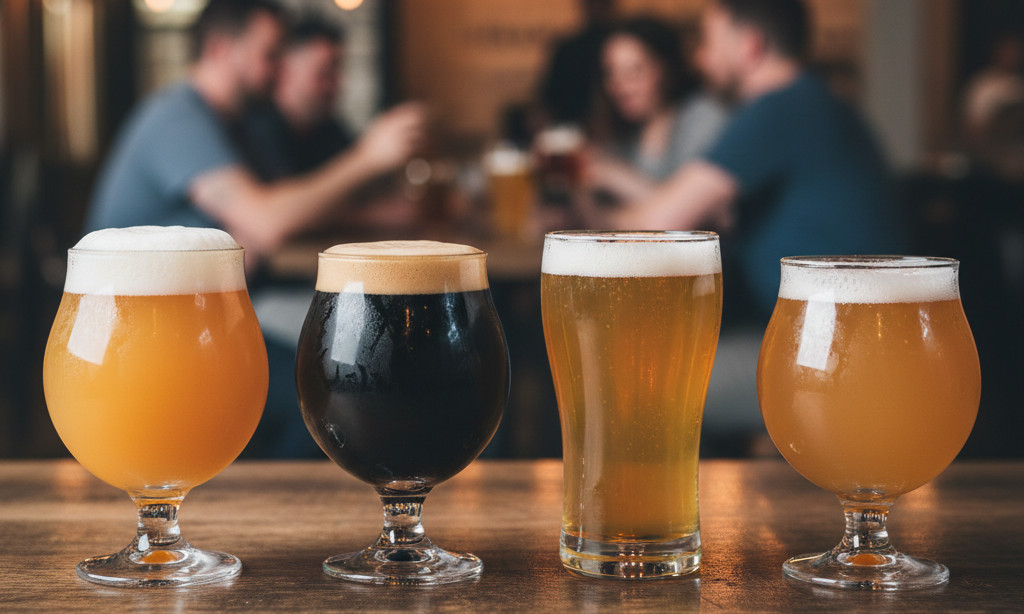
But it explains why a hazy IPA from a neighborhood brewery tastes radically different from a mass-produced light lager.
It’s Not Just Size — It’s Independence
Ownership changes incentives.
When a brewery is independent, decisions are often driven by:
- Brewers
- Founders
- Local investors
- Community values
Not shareholders demanding quarterly growth.
Independence allows creative risk.
And risk is where innovation lives.
Many modern styles — including the American IPA revival, barrel-aged stouts, and sour beer experimentation — emerged from smaller breweries willing to push boundaries.
The Craft Beer Movement: How It Started
Modern craft beer culture began gaining momentum in the late 1970s and early 1980s.
For decades prior, global beer markets were dominated by light, highly filtered lagers designed for uniformity and shelf stability.
Homebrewers and small entrepreneurs began asking:
“What if beer could taste like something?”
That question reshaped the industry.
What started as rebellion turned into a global movement. Today, craft beer scenes thrive from California to Copenhagen to Mexico City to Melbourne.
The movement didn’t eliminate commercial beer — it expanded what beer could be.
Is Craft Beer Always Better?
Short answer: no.
Long answer: it depends on what you value.
Craft beer often emphasizes:
- Bold flavors
- Freshness
- Ingredient transparency
- Style diversity
But it can also be:
- More expensive
- Less consistent batch-to-batch
- Harder to find in some regions
The real advantage isn’t superiority.
It’s variety.
Why Craft Beer Matters
Before the craft movement, beer shelves were narrow.
Today they’re expressive.
Beer became:
- Creative
- Regional
- Experimental
- Collaborative
- Cultural
It expanded the definition of what beer can be.
Understanding that shift helps you navigate modern beer culture with more clarity — whether you’re ordering at a bar, browsing a bottle shop, or exploring new breweries.
Where to Go From Here
If you want to go deeper, you might explore:
- Our complete guide to beer styles
- A breakdown of how beer is made
- Or start discovering local breweries near you
Craft beer isn’t defined solely by size.
It’s defined by independence, experimentation, and flavor diversity.
Final Takeaway
Craft beer represents a shift from uniformity to expression.
It’s less about replacing commercial beer — and more about adding possibility.
Question for You
What was the first beer that made you realize beer could taste different?
Discover More
Explore beer styles, learn how craft beer is made, or start discovering great local breweries near you — and see where your taste leads next.