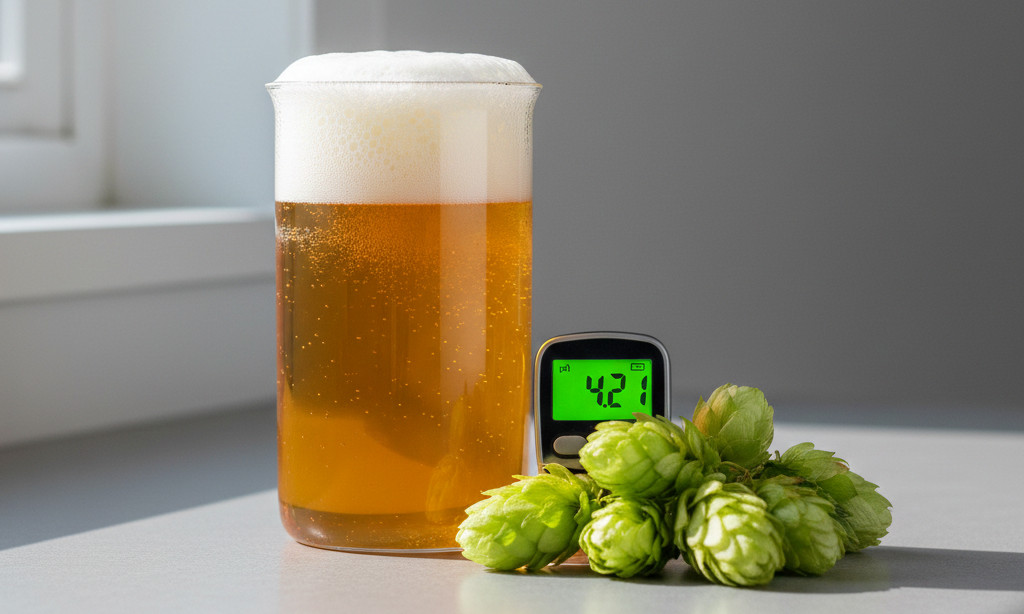
At its core, craft beer is built from just four main ingredients:
- Water
- Malted grain
- Hops
- Yeast
But what separates a bland beer from a bold, expressive one is how those ingredients are handled.
Let’s break down the brewing process step by step.
Step 1: Malting – Preparing the Grain
Most craft beer starts with barley.
The barley is soaked, allowed to germinate, then dried in a kiln. This process:
- Develops enzymes
- Creates fermentable sugars
- Builds flavor foundations
Darker kilning produces roasted malts (think stout).
Lighter kilning creates the base for pale ales and lagers.
Step 2: Mashing – Extracting Sugars
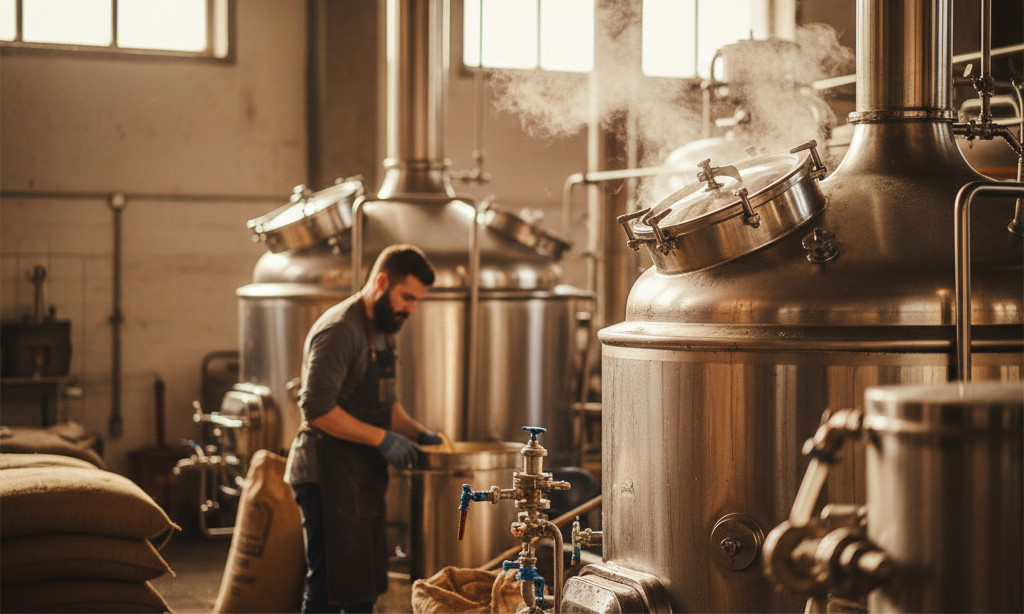
The malted grain is crushed and mixed with hot water.
This mash activates enzymes that convert starch into sugar.
The result is a sweet liquid called:
Wort (pronounced “wert”)
Temperature during mashing matters:
- Lower mash temps → lighter body, more fermentable beer
- Higher mash temps → fuller body, sweeter finish
This is where texture begins to take shape.
Step 3: Lautering – Separating Liquid from Grain
The wort is drained from the grain bed.
The remaining grain husks act as a natural filter.
At this stage, you now have:
Clear, sugar-rich wort ready for boiling.
Step 4: Boiling – Adding Hops
The wort is boiled for 60–90 minutes.
During this stage, hops are added at different times.
Why timing matters:
- Early hop additions → bitterness
- Late hop additions → aroma
- Whirlpool additions → flavor complexity
Boiling also:
- Sterilizes the liquid
- Concentrates sugars
- Locks in structure
This is where beer gains its backbone.
Step 5: Fermentation – Where Beer Becomes Beer
After boiling, the wort is cooled and yeast is added.
This is the turning point.
Yeast consumes sugar and produces:
- Alcohol
- Carbon dioxide
- Flavor compounds
There are two main fermentation styles:
Ale Fermentation
- Warmer temperatures
- Fruity, complex notes
- Faster turnaround
Lager Fermentation
- Cooler temperatures
- Cleaner, crisp profile
- Slower fermentation
Fermentation typically lasts:
- 1–2 weeks for ales
- Several weeks (or months) for lagers
This stage defines the beer’s personality.
Step 6: Conditioning & Maturation
After primary fermentation, beer rests.
This allows:
- Flavors to stabilize
- Harsh edges to soften
- Carbonation to develop
Some craft beers are:
- Dry-hopped
- Barrel-aged
- Bottle-conditioned
- Mixed-fermentation
This is often where craft breweries experiment.
Step 7: Packaging
Finally, the beer is packaged into:
- Kegs
- Bottles
- Cans
Many craft breweries choose cans today because they:
- Protect from light
- Preserve hop aroma
- Travel better
From here, it’s ready to drink.
Why Craft Brewing Feels Different
Large industrial breweries often optimize for:
- Speed
- Uniformity
- Shelf stability
Craft breweries often optimize for:
- Flavor exploration
- Style experimentation
- Seasonal variation
- Ingredient expression
The brewing steps are technically the same.
The philosophy behind them isn’t.
Frequently Asked Questions
How long does it take to make craft beer?
Most ales take 3–4 weeks total.
Lagers can take 6–10 weeks.
Is craft beer brewed differently from commercial beer?
The process is structurally similar, but ingredient quality, batch size, and experimentation differ significantly.
Can you brew craft beer at home?
Yes. Homebrewing kits allow beginners to recreate small-batch brewing on a kitchen scale.
Takeaway
Craft beer isn’t complicated because it uses more ingredients.
It’s expressive because brewers make intentional choices at every step:
- Grain selection
- Mash temperature
- Hop timing
- Yeast strain
- Conditioning method
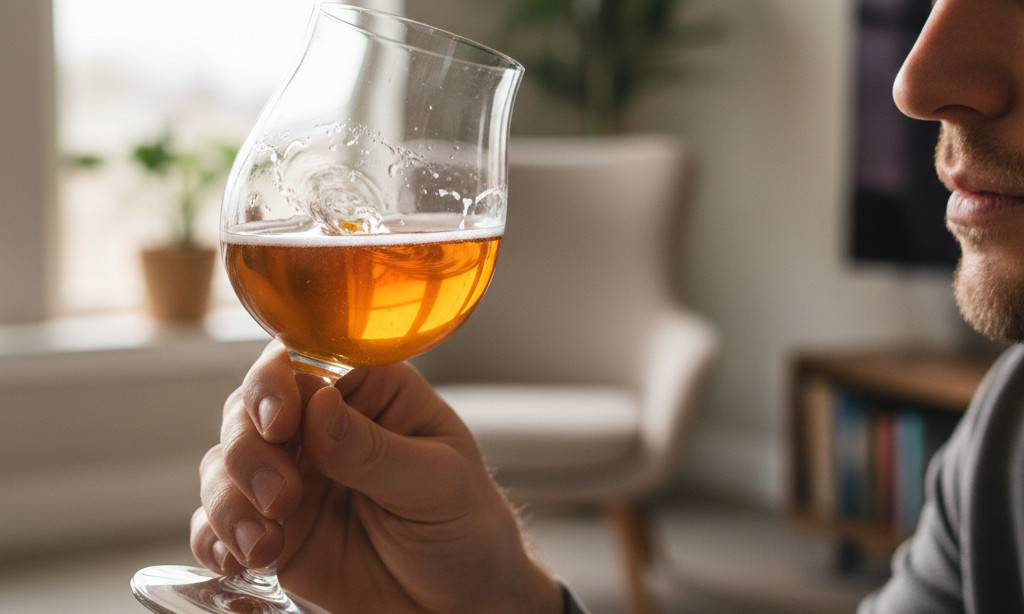
Understanding how craft beer is made changes how you taste it.
You stop drinking passively.
You start noticing structure.
Question for You
Next time you try a new beer, can you taste the hop timing?
The yeast character?
The body from the mash?
Soft CTA
Want to explore beers built with different brewing techniques?
Start discovering local breweries near you and taste the process for yourself.